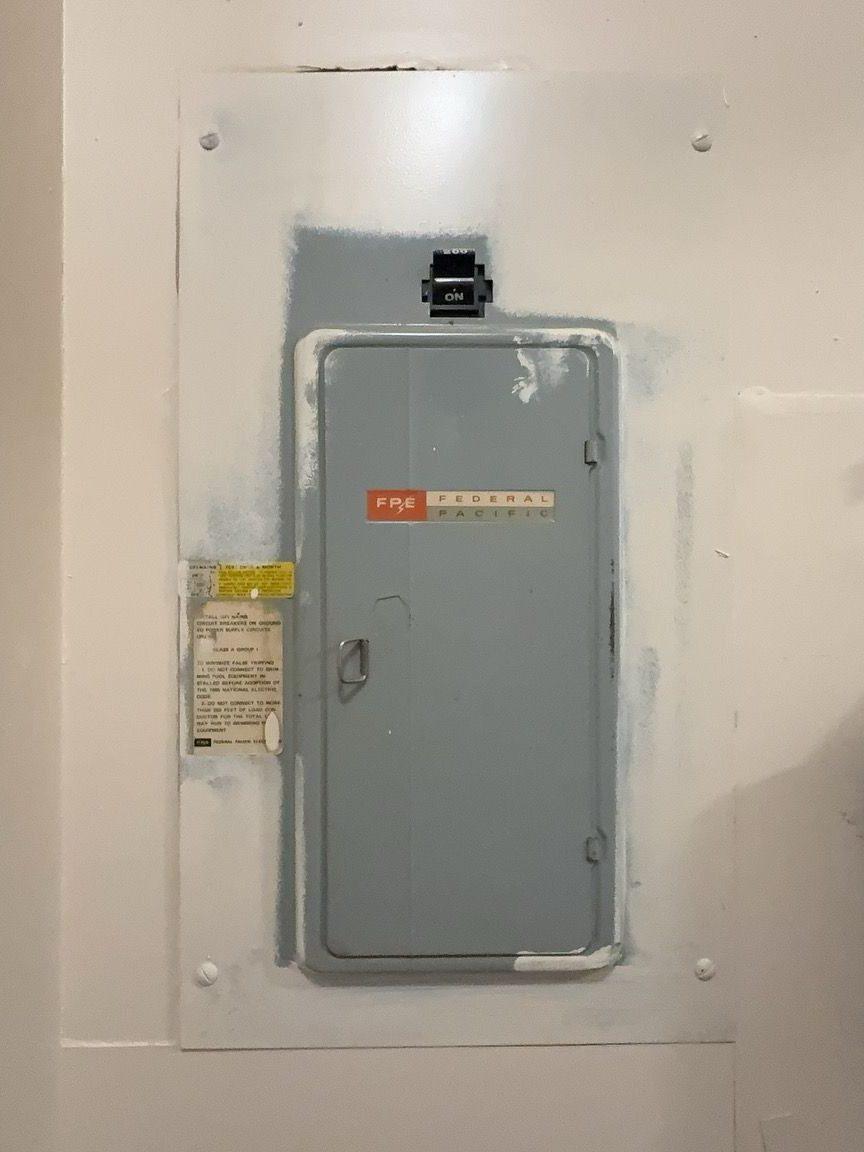
 Before
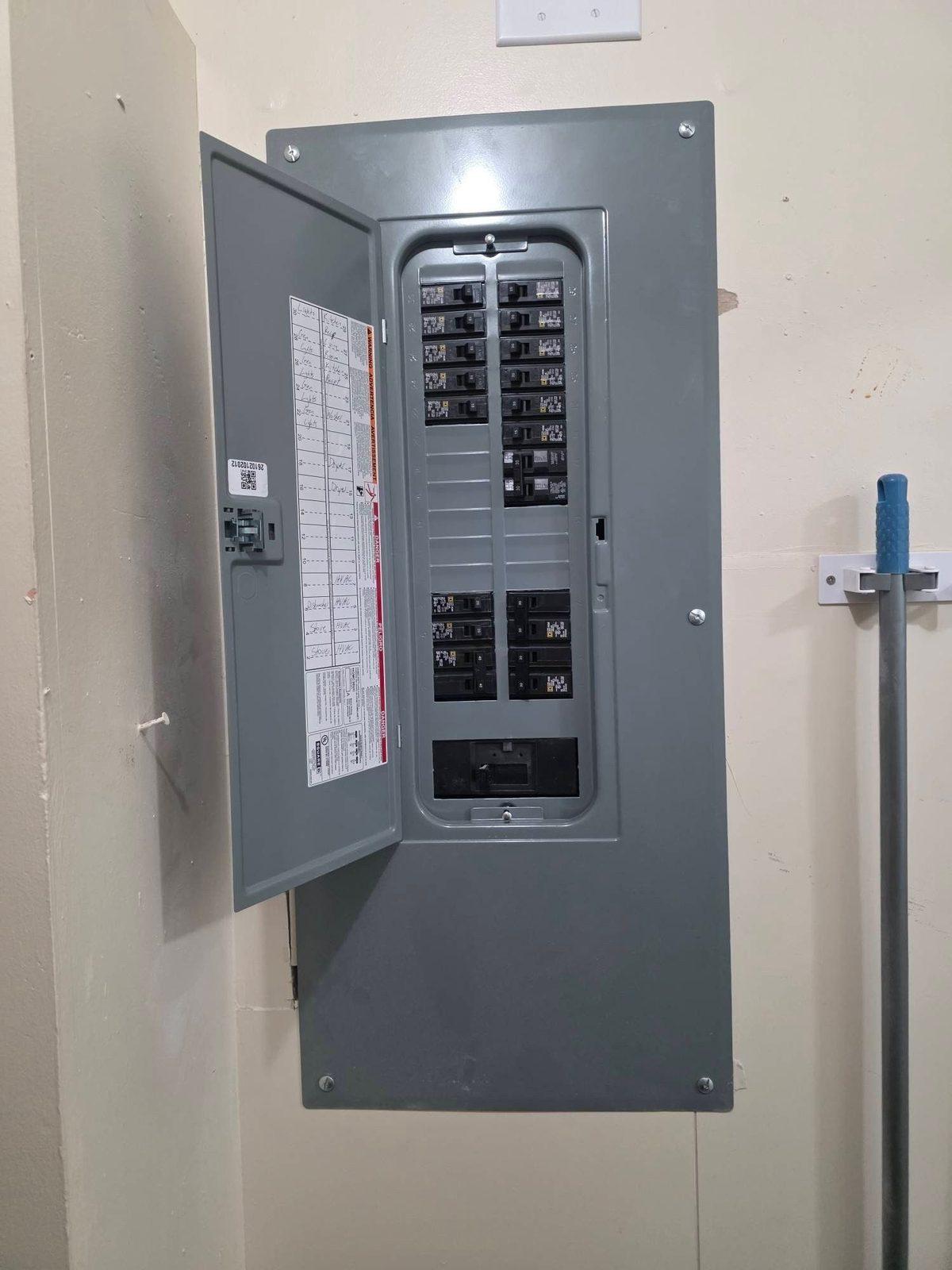 After
Washington, NC
Federal Pacific panel replaced with a new breaker panel
HomeCloud swapped the old electrical panel for a new, properly labeled breaker panel.

Labeling the panel, closing open spots, replacing outdated or recalled panels, and fixing the meter and service wires.
Real HomeCloud jobs, before and after. Click through to see more.
BeforeAfterWashington, NC
HomeCloud swapped the old electrical panel for a new, properly labeled breaker panel.
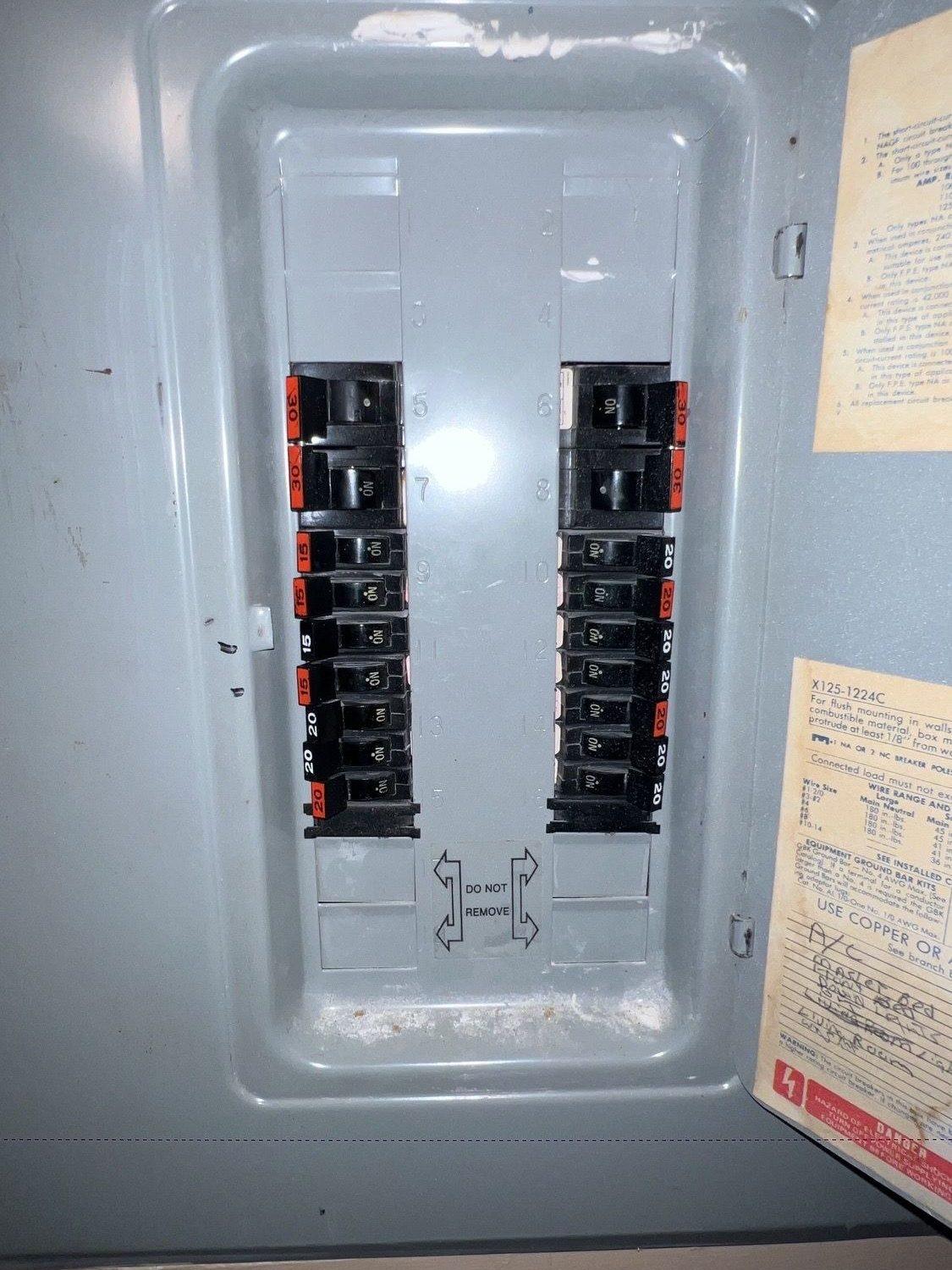 Before
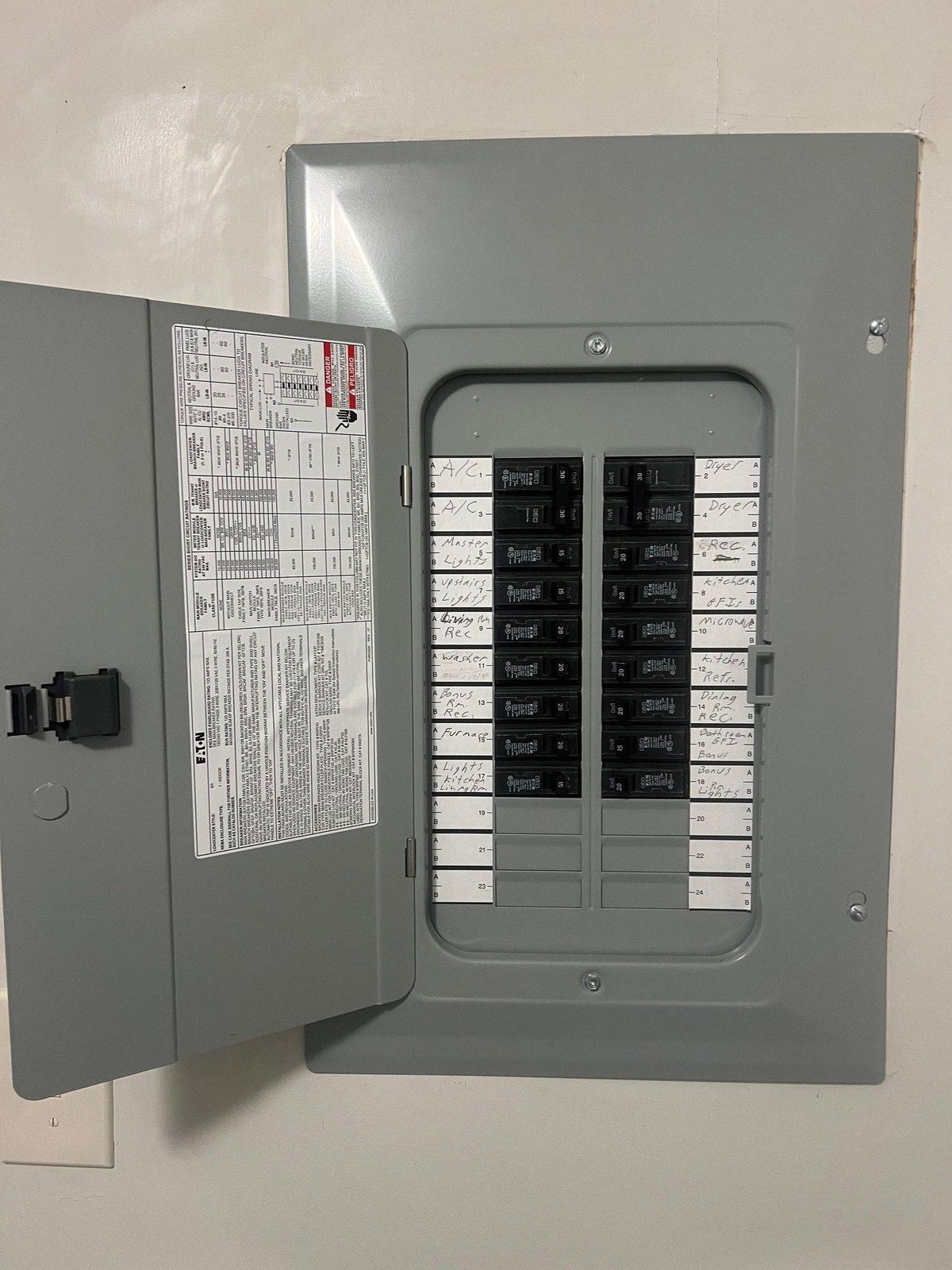 After
Decatur, GA
HomeCloud replaced the old Stab-Lok electrical panel with a new Eaton panel with clearly labeled circuits.
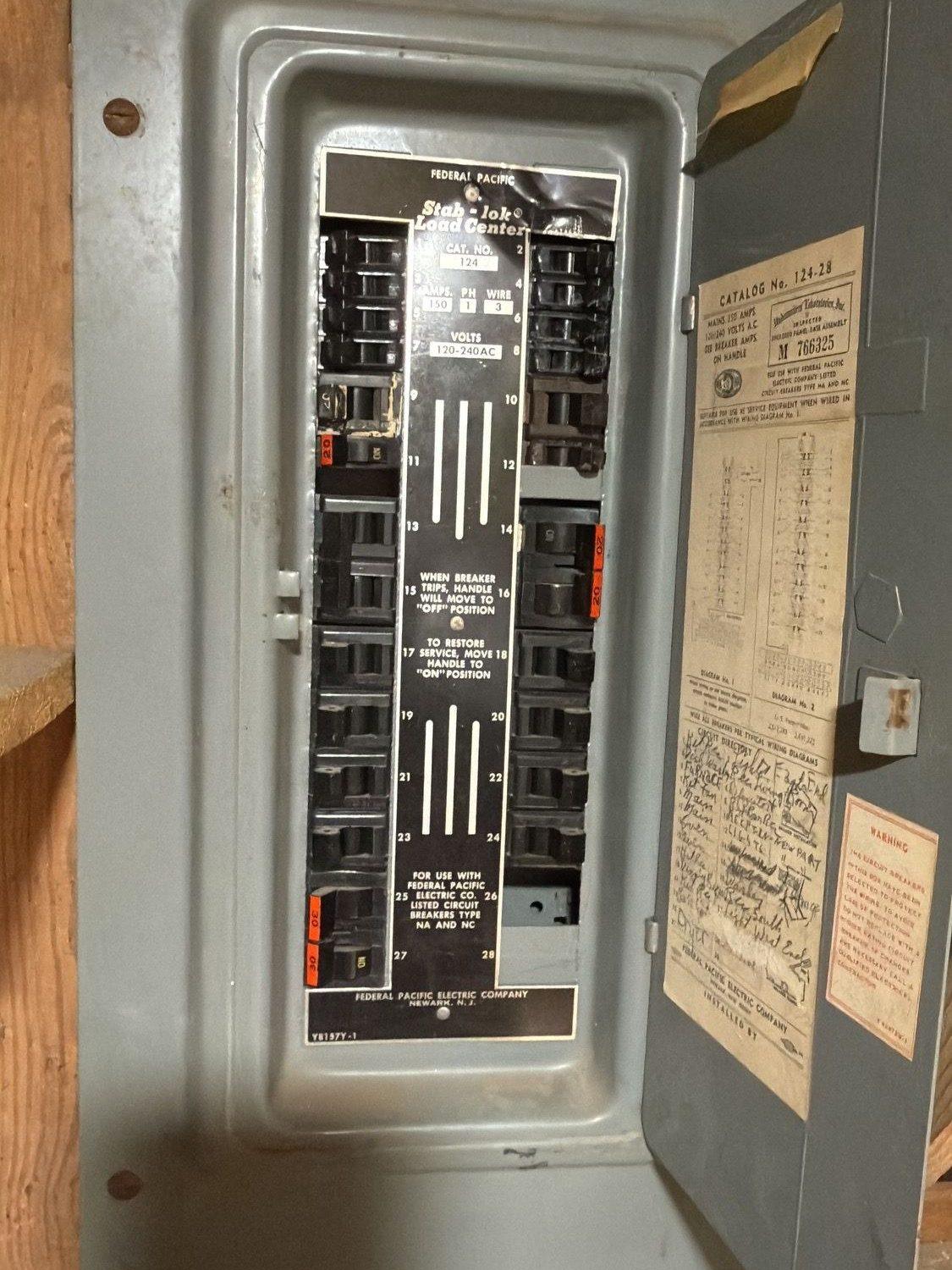 Before
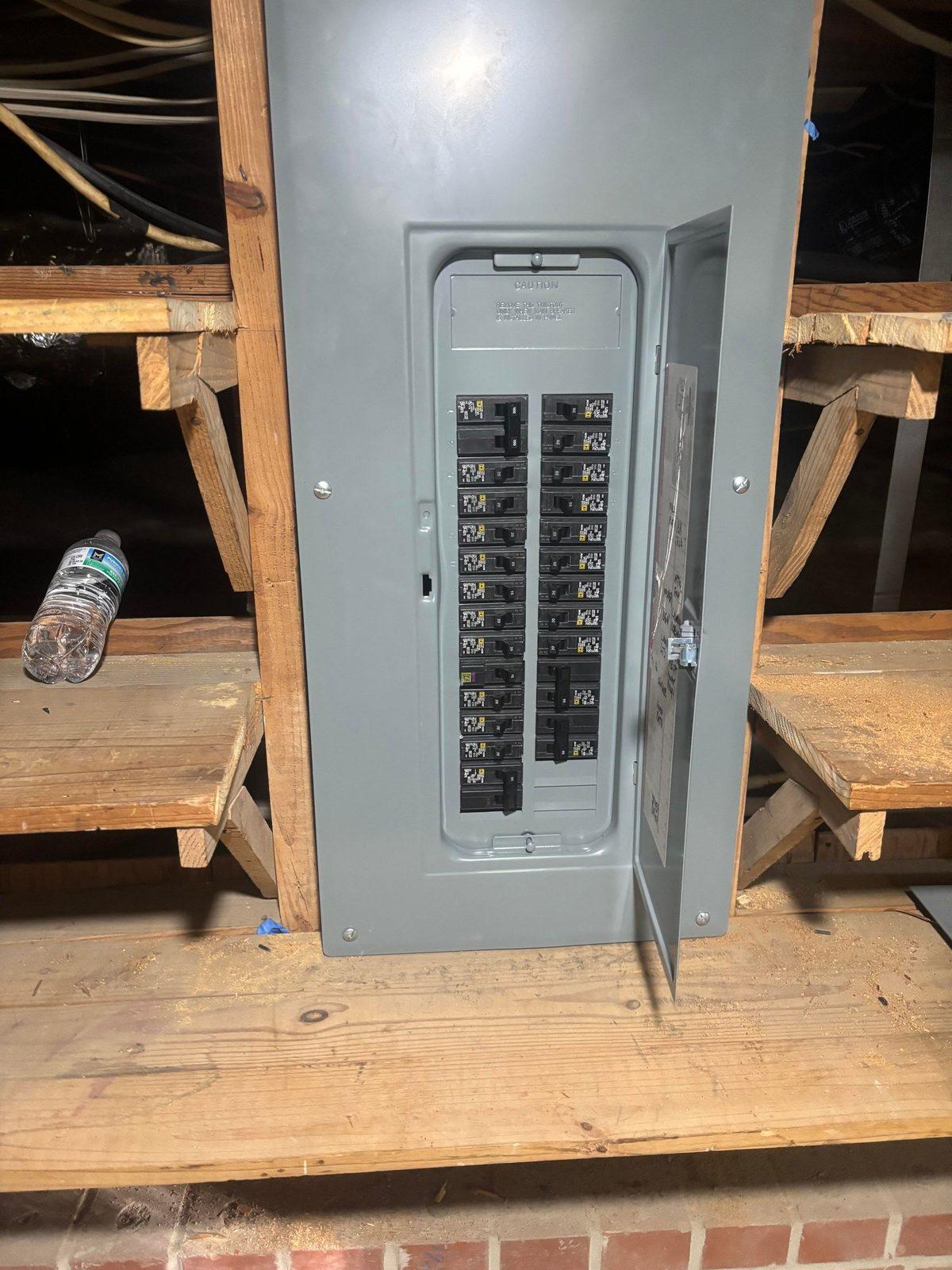 After
Chapel Hill, NC
HomeCloud replaced the old Federal Pacific sub panel with a new electrical panel.
The electrical panel is where power from the street is split into the circuits that run through the house. Most panel findings are small: the breakers aren't labeled, or there are open spots where knockouts are missing. A few are bigger, like an old fuse panel or a Federal Pacific Stab-Lok panel, which usually means replacing the panel.
The service entrance is everything that brings power to the panel: the overhead wires or underground line, the mast, the meter and the meter base. The meter and the wires coming in from the street usually belong to the power company, so some of this work needs their help.
HomeCloud prices panel work and manages the job from start to finish. A licensed electrician does the work.
| Work | Most homes | Middle price | Based on |
|---|---|---|---|
| Label the electrical panel | About $250 | The 29% of homes where it was priced | |
| Add missing knockouts | $170 to $250 | $250 | Limited number of homes |
| Secure loose conduit at the service entrance | $150 to $210 | $150 | Limited number of homes |
| Replace the electrical panel | $2,100 to $4,100 | $3,900 | Limited number of homes |
What HomeCloud reports priced this fix at in homes we evaluated Sep 2025 to Oct 2026. The range is the middle half of homes; the middle price is the median. Your price comes from a written estimate for your home. Panel replacement prices vary a lot with the work involved.
Old fuse panels often don't have room for what a modern home plugs in, and a fuse of the wrong size can be screwed in, which the CPSC warns is a fire hazard. Federal Pacific Stab-Lok panels have long had concerns about breakers that may not trip. The CPSC closed its investigation without deciding either way, but at least one insurer recommends replacing them, and the panel can come up when you buy a home or shop for insurance. Recalled panels follow the recall's instructions.
For how to tell what you have and what the sources say, see what kind of electrical panel do I have?
If your report lists one of these, plan for a replacement estimate.
Whatever the brand, call a licensed electrician if you notice a burning smell near the panel, an outlet or a switch, scorch marks, rust or water stains on or around the panel, or a breaker that trips again right after you reset it. The CPSC says outlets or switches that feel unusually warm can mean a loose connection that could start a fire, and to stop using them until an electrician checks them.
Permit and power company
Panel replacements usually need a permit. If the meter base or the service wires are part of the job, the power company has to shut off and restore power.
Replace the panel
The old panel comes out and a new breaker panel goes in, and each circuit is connected to a new breaker.
Label and sign off
Each breaker is labeled with what it controls, and the work is checked by the local building department where a permit is required.
When something goes wrong, you or an electrician need to know which breaker to shut off. Labeling means turning breakers off one at a time and writing down what each one controls. Missing panel labels came up in 28% of the homes HomeCloud evaluated, Sep 2025 to Oct 2026.
Look at the main breaker, usually the largest switch at the top of the panel: the number on it is the panel's size in amps. The label inside the panel door often lists it too. Older homes often have 60 or 100 amp panels, while newer homes commonly have 200 amps or more, according to Rewiring America. You never need to take the front cover off; that's a job for a licensed electrician.
It can. Some insurers recommend replacing these panels, and some won't cover homes that still have them, so it can come up when you buy, sell or shop for homeowners insurance. Ask your insurance agent how your insurer handles it.
Some homeowners use financing for bigger repairs. See financing options.
Tell us what's going on with your home's electrical and we'll send you a priced estimate.
Get an Estimate